
Web & app development · Hong Kong
Websites and apps,
built to be found.
We design and build fast websites, web apps and native iOS and Android apps — engineered from the first commit to rank on Google, get cited by ChatGPT and Perplexity, and turn visitors into customers.
What we build
One team for the site, the web app and the app.
The same senior people scope, design and build all three — under the same roof as the Google Ads and GEO that bring customers to them.
Websites
Marketing sites and online stores on Next.js, Astro or Shopify — fast by default, bilingual when you need it.
- Core Web Vitals tuned page by page
- Structured data from the first commit
- English and Chinese as first-class pages
Web apps
Portals, dashboards and customer-facing tools with real application logic — in any browser, nothing to install.
- Sign-in, roles and permissions
- Real-time updates
- APIs and third-party integrations
Native apps
Swift for iOS and Kotlin for Android — or Flutter and React Native when one codebase is the smarter trade.
- WidgetKit and Live Activities
- TestFlight builds you can hold
- App Store submission handled
Case study · Web app
Any shop counter,
now a game-code store.
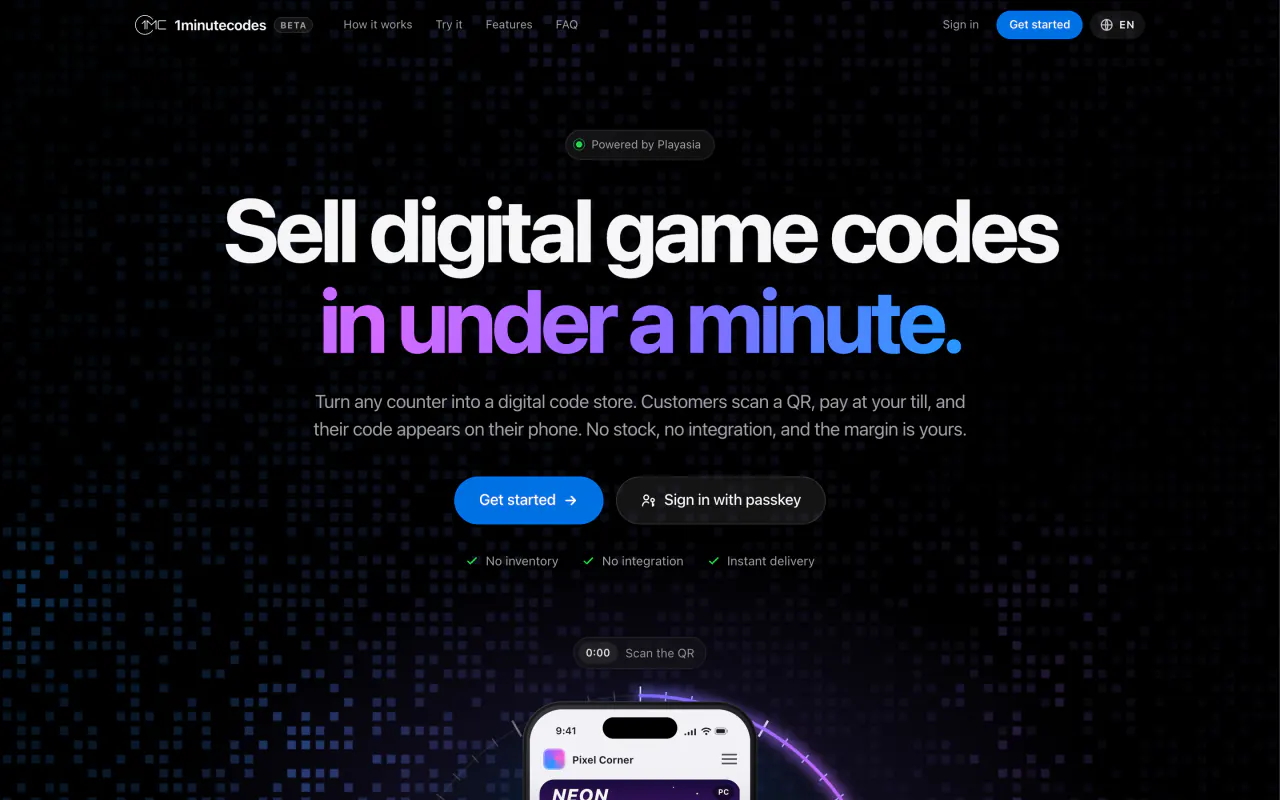
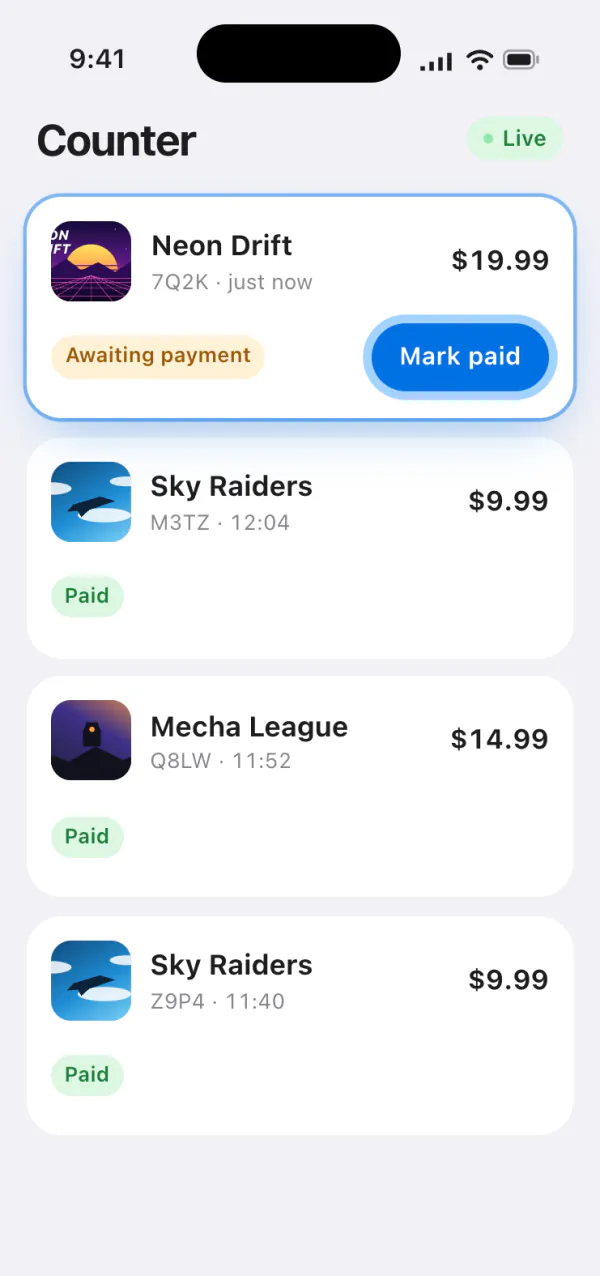
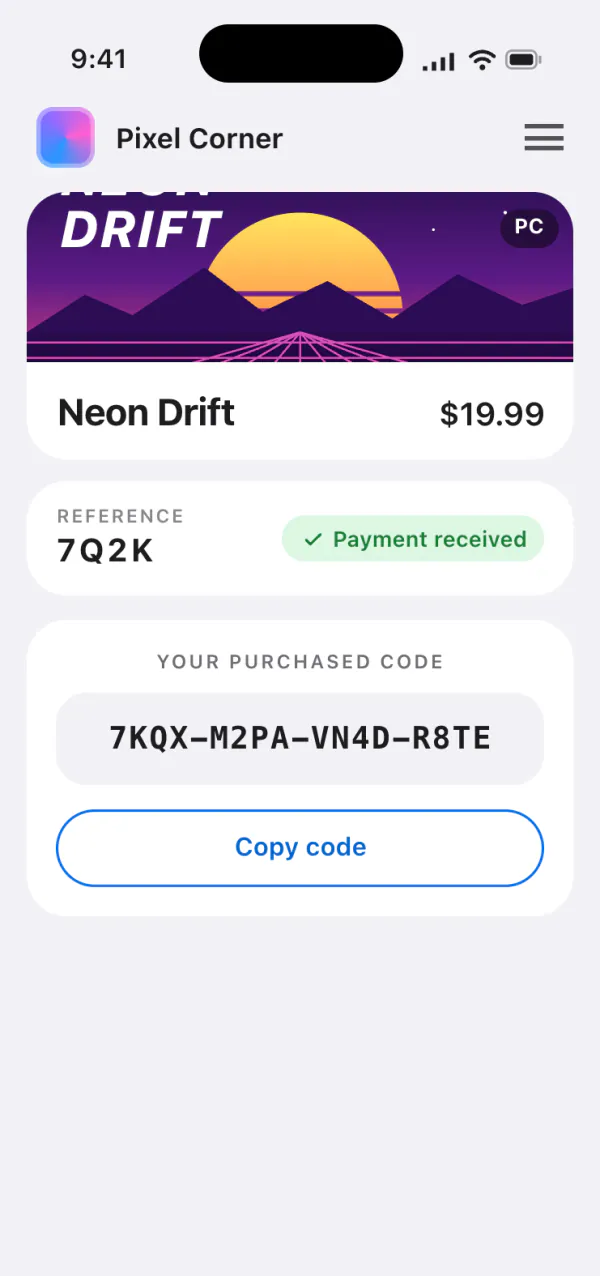
1minutecodes lets shops sell PlayStation, Nintendo, Steam and thousands of other digital codes at the counter — no stock to hold, nothing to integrate, nothing for the customer to install. We designed and built it for Playasia: the product, the web app and its landing page.
- ScanA customer scans the product's QR code at the counter.
- PayThey pay at the till, however the shop already takes payment.
- RevealOne tap from the cashier, and the code is on their phone.
- Client
- Playasia
- Our role
- Product design, web app and landing page
- Live
- 1minutecodes.com, in beta
- Runs on
- Any phone's browser — no app to install
What we engineered
Passkey sign-in
Owners and cashiers sign in with a passkey — Face ID, Touch ID or a fingerprint. No passwords to phish or forget.
A live counter
New orders reach the till the instant they're placed, on any phone. One tap marks them paid.
Zero inventory
A code is sourced from Playasia only once the customer has paid at the counter, so the shop never holds stock.
Codes sealed at rest
Every code is encrypted before it's stored, and unlocks only on the customer's phone once they've paid.
Built for many stores
Run one brand across many outlets: each gets its own till and staff, with one shared catalogue.
Seven languages
English, Korean, Japanese, Spanish, Simplified Chinese, Hindi and German, in light and dark themes.
Schnalz Studio
Six apps of our own.
Proof you can download.
Before we build yours, we build our own: six apps under the Schnalz Studio label, live on the App Store — and DB Transport on Google Play too.
 DB Transport
 Vokabel
 Lumina Sudoku
 Circles
 Candy Cracker
 Party Games
Built to be found
Every build ships ready for Google — and for AI.
Most studios hand over a site and leave the marketing to someone else. Ours come from the team that runs GEO and Google Ads, so the foundations are in from the first commit.
- Structured data that tells engines who you are
- Core Web Vitals tuned page by page
- Answer-ready pages that AI engines can quote
- English and Chinese as first-class pages, each with its own URL
- GA4 and conversion tracking wired in before launch
How we build
From brief to launch.
The same four-step rhythm we run everything on, pointed at a build instead of a campaign.
- Week 101
Discovery & scope
What it must do, who will use it and what already exists — then our call on web, native or cross-platform, with the trade-offs in plain language.
- Week 202
Proposal & architecture
A one-page proposal: features, platforms, timeline and one number. Once you sign off, the price holds unless the scope changes.
- Build03
Build & test
Riskiest features first. You follow along on working builds — a preview link on the web, TestFlight on iPhone — not status decks.
- Launch04
Launch & grow
We ship to the web or through App Store review, then stay for updates — with GEO, Google Ads and analytics under the same roof.
Pricing
One brief. One page. One number.
Every build is quoted as a fixed scope before work begins. Send a brief — even a rough one — and you get a one-page proposal back: what we'll build, on which platforms, by when, and what it costs.
No day rates and no drifting estimates. The number holds unless the scope changes — and you hear about that before it happens.
- Websites
- Typically live in about four weeks
- Web & native apps
- Timeline stated in the proposal
- Setup fees
- None
- Contract
- No annual contract
Build questions
What people ask before they build.
How much does a website or an app cost in Hong Kong?
How long does it take to build a website or an app?
Should I build a web app or a native app?
Do you build web apps, or only websites?
Will what you build rank on Google and show up in AI answers?
Who handles App Store submission?
Tell us what
you want to build.
Send a rough brief. You'll get a one-page proposal back with the scope, the timeline and one number.